


1. The first email that triggered a six-month cost restructure
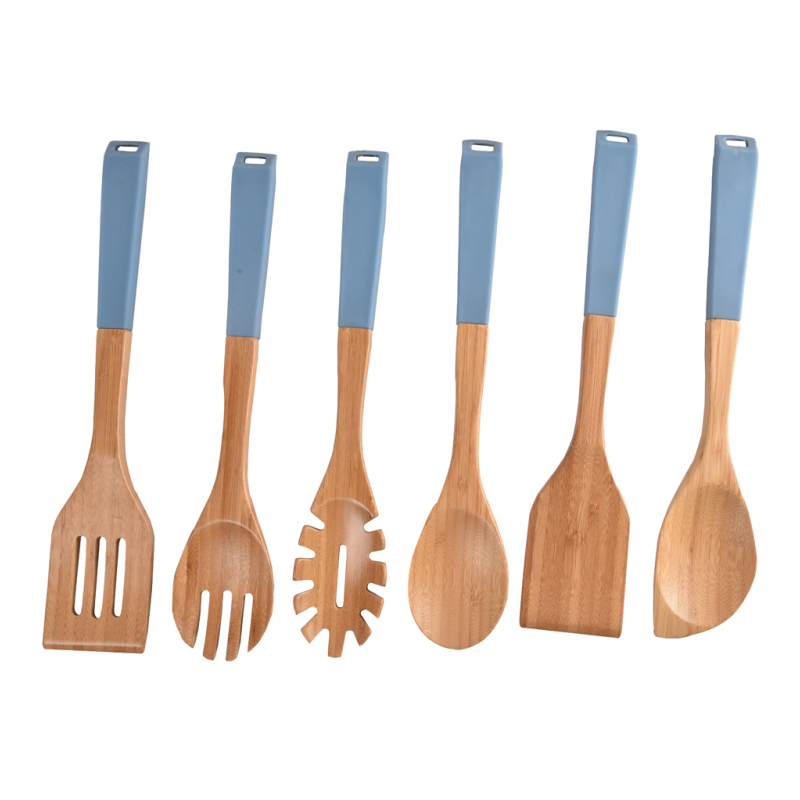
The buyer was a mid-sized European houseware brand evaluating bamboo kitchenware for the first time. The inquiry email reached us in spring, asking for a quote on a 6-piece bamboo utensil set with a brand-specific handle finish and a custom retail packaging graphic. The first reply we sent included two parallel price paths -one ODM with light brand customization, one fully OEM -because we have learned that putting a single price in front of a new bamboo kitchenware buyer creates a misreading that takes months to undo.
The buyer chose the OEM path on the second email, on the assumption that “OEM means lower per-unit cost at scale.” Six months later, the buyer returned to us with a question that we have heard often enough to recognize as a pattern: “Why does our actual cost look different from the cost we budgeted?” The six-month restructure that followed is the reason this article exists.
This is not a story about a single buyer’s mistake. It is a pattern we see across new bamboo kitchenware brands in Europe, the US, Japan, South Korea, Australia, and Brazil. The ODM/OEM decision looks like a label choice on day one, but it is actually a cash-allocation decision that unfolds over a six-to-twelve-month buyer journey. The rest of this article walks through that journey.
2. Why bamboo’s two-mode cost logic differs from plastic OEM
Most new bamboo kitchenware buyers arrive at the ODM/OEM decision with a mental model shaped by plastic OEM sourcing. The plastic OEM model is mature, well-documented, and structurally simple: the mold is a single capital investment, the per-unit allocation is a clean amortization, and the sampling rework loop is short because plastic behaves predictably. Bamboo does not work that way.
The first difference is in tooling life. A steel injection mold for plastic can run for many production cycles with stable dimensional output. Bamboo and acacia tooling -the CNC programs, the sanding jigs, the laser-engraving fixtures -degrades differently. The natural-fiber tooling life is shorter, and the tooling modification frequency between batches is higher, because the material variability of bamboo and acacia forces geometry re-calibration after several production cycles.
The second difference is in material waste at press. Plastic molded parts come out of the mold close to net shape. Bamboo and acacia press outputs lose material to grain-direction trimming, moisture-content adjustment, and surface-finish sanding. The waste percentage of bamboo and acacia tooling is higher than plastic, and the waste is harder to model because it depends on the bamboo lot rather than the machine settings.
The third difference is in sampling rework frequency. Plastic sampling typically runs one to two rounds. Bamboo and acacia sampling typically runs two to four rounds, because the grain direction, the moisture content at pressing, and the sanding tolerance stack introduce variability that plastic and metal do not. Each sampling round carries a sample cost that buyers who benchmark against plastic OEM systematically miss.
The fourth difference is in certification chain overhead. Plastic OEM has well-known regulatory paths -FDA, EU food contact, LFGB. Bamboo OEM has those same paths plus the FSC chain-of-custody certification, which applies to the material itself rather than to the finished product. The FSC chain-of-custody cost is amortized across the supplier’s overall bamboo volume, but it is a real cost line that plastic OEM buyers do not face. Buyers who treat FSC as a free checkbox under-budget by a meaningful amount.
These four differences are why bamboo kitchenware ODM and OEM behave as two different cost modes rather than as two points on the same plastic OEM cost curve.
3. The four numbers that determine ODM vs OEM viability
Before any per-unit price is on the table, four qualitative dimensions determine whether ODM or OEM is the right path for a new bamboo kitchenware brand. None of these are percentages or absolute numbers -they are decision dimensions that the buyer and the supplier should walk through together before committing to a sourcing model.
How wide is the product family the brand intends to launch? Narrow SKU families favor OEM. Wide SKU families favor ODM with brand-applied customization, because ODM amortizes design across the catalog.
Has the industrial design been validated in retail through a prior product family or a small-batch retail test? A validated design opens the OEM path. An unvalidated design should start with ODM.
How confident is the brand in its volume forecast at batch 2 and batch 3? Visible volume favors OEM. Uncertain volume favors ODM, which converts volume risk into per-unit cost.
Is the brand targeting retailers that prioritize shelf-ready consistency or design exclusivity? Shelf-ready consistency favors ODM. Design exclusivity favors OEM.
A brand that scores high on Dimension 1 (wide SKU family) and low on Dimension 2 (unvalidated design) is a strong ODM candidate, regardless of volume or retailer profile. A brand that scores low on Dimension 1 and high on Dimension 2 is a strong OEM candidate. The interesting cases are the brands that score high on two dimensions and low on the other two -those brands benefit from a staged approach, which we describe in the section below.
4. A real ODM wholesale margin walkthrough
To make the ODM cost structure tangible, the walkthrough below traces a representative ODM bamboo kitchenware project from the first buyer email to the second-batch margin realization. The numbers and percentages in this walkthrough are deliberately abstracted -the structure is what matters, not the specific figures.
Week 1 – inquiry and design selection. The buyer selects a 6-piece bamboo and wooden utensil set from our existing catalog. The geometry, the bamboo grain direction logic, the joinery tolerance stack, and the packaging structure are all pre-existing. The buyer applies a brand-specific handle finish and a brand-specific packaging graphic. Sampling begins.
Week 4 – sampling completion. The first sample confirms the brand-applied finish and the laser-engraving position. The second sample locks the packaging graphic. Sampling completes in two rounds. The cost of these rounds is absorbed into the per-unit price under our standard ODM terms.
Week 8 – first batch production. The first batch ships. The per-unit FOB includes an amortization contribution to the design and tooling pool that funded the original development, but the buyer is not exposed to tooling risk on the first batch. Wholesale margin calculation under ODM is straightforward because the per-unit price contains all cost layers.
Week 14 – retail sell-through validation. The first batch lands in retail. The brand observes the sell-through rate, the retailer feedback, and the packaging graphic reception. This is the validation phase -the phase in which the brand learns whether the bamboo kitchenware category is a fit for its retail channel.
Week 22 – second batch order and margin realization. The second batch order is placed. By this point, the ODM project is in or near break-even, because the first-batch per-unit margin has been validated against the actual retail sell-through and the second batch benefits from the brand’s improved forecasting. The validation phase closes and the scale phase begins.
The ODM walkthrough shows why ODM breaks even by the second batch in most cases: the buyer’s cash exposure is on the per-unit side, and the per-unit margin is knowable from the first batch onward.
5. A real OEM wholesale margin walkthrough
The OEM walkthrough below traces the same brand -the same 6-piece bamboo utensil set, the same European retail channel -but on the OEM path. The structure is parallel to the ODM walkthrough so the cost differences are visible.
Week 1 – inquiry and design brief. The buyer supplies a fully new geometry, a custom handle profile, and a custom packaging structure. Our engineering team reviews the design brief and confirms feasibility. The buyer funds the geometry-specific tooling upfront. The tooling cost is meaningful and is amortized across the buyer’s volume forecast.
Week 4 to Week 12 – sampling rework loop. The first sample confirms geometry feasibility. The second sample corrects the handle thickness and the sanding finish found in the first. The third sample aligns the packaging structure with the retailer’s shelf dimensions. The fourth sample, when needed, locks the final color and finish specification. Sampling runs three to four rounds, each round carrying a sample cost.
Week 16 – first batch production. The first batch ships under OEM terms. The per-unit FOB is lower than the ODM per-unit FOB at comparable volume, because the buyer has already funded the design and tooling layers upfront. But the first-batch cash exposure includes the unamortized tooling remainder and the sampling rework rounds, so the first-batch wholesale margin is compressed relative to the per-unit price.
Week 24 – retail sell-through validation. The first batch lands in retail. The brand observes the same signals as in the ODM walkthrough -sell-through, retailer feedback, packaging reception. But the OEM brand carries an additional signal: whether the volume forecast that justified the OEM tooling investment is being met.
Week 36 – second batch and tooling amortization milestone. The second batch order is placed. The OEM project reaches the point at which the cumulative batch revenue crosses the cumulative tooling and sampling cost. This is the OEM break-even window, and it typically opens later than the ODM break-even window because the upfront tooling exposure is larger.
Week 52 – scale phase entry. At batch 3 or later, the OEM project enters the scale phase. The per-unit margin stabilizes, and the OEM advantage over ODM -lower per-unit price at scale -becomes visible. But the brand has carried the cash exposure and the volume risk across the entire scale phase.
The OEM walkthrough shows why OEM takes longer to break even: the upfront cash exposure is larger, the sampling rework loop is longer, and the volume forecast must hold across multiple batches.
6. The break-even window -where each path crosses
Mapping the two walkthroughs onto a single buyer-journey timeline makes the break-even window visible. The timeline below separates the journey into three phases: validation phase (week 1 to week 24), scale phase (week 24 to week 52), and stable phase (week 52 onward).
The break-even window for ODM typically opens inside the validation phase, around the second batch. The break-even window for OEM opens inside the scale phase, several months later, and only if the volume forecast is accurate. The two windows do not overlap. This is the structural reason that the ODM/OEM decision cannot be made on per-unit price alone.
7. Three questions to ask before you pick a path
Before committing to ODM or OEM in bamboo kitchenware, three self-check questions are worth walking through with the supplier. These questions are qualitative, not quantitative -the answer to each is a “yes / partly / no” that maps onto the four dimensions from H2 3.
7.1 Is your industrial design retail-validated?
A retail-validated design -one that has been tested in retail through a prior product family or a small-batch retail pilot -unlocks the OEM path. An unvalidated design should start with ODM, because the validation phase is precisely where the brand learns whether the geometry, the finish, and the packaging are right for the retailer channel.
7.2 What is your volume horizon at batch 2?
A visible volume horizon at batch 2 and batch 3 is the prerequisite for OEM. An uncertain volume horizon should stay on ODM, because ODM converts volume risk into per-unit cost. The volume horizon check is more useful than the volume forecast number, because it surfaces whether the brand has the operational capacity to manage an OEM multi-batch plan.
7.3 Which retailer channel defines your shelf-fit priority?
Shelf-ready consistency -the priority for most supermarket and drugstore channels -favors ODM. Design exclusivity -the priority for premium kitchenware boutiques, design-led retailers, and gift channels -favors OEM. The retailer channel answer should be specific: “we sell through retailer X, and their category manager expects Y.”
8. When neither ODM nor OEM is the answer
For most new bamboo kitchenware brands, ODM or OEM is the right frame. But a small but growing subset of brands is finding margin through adjacent models that the ODM/OEM binary does not capture. Three patterns are worth noting.
The first pattern is hybrid sourcing: a brand uses ODM for its core catalog and OEM only for the two or three SKUs that have been validated in retail and that need design exclusivity. The hybrid approach captures most of the ODM cash-flow advantage while preserving the OEM differentiation narrative for the flagship SKUs.
The second pattern is collaborative design: the brand contributes its retail insights to the supplier’s design department in exchange for a shared-ownership design that sits between ODM and OEM. The collaborative model requires a brand with strong retail-side design language and a supplier with a mature design department -not every brand-supplier pair fits this model, but the ones that do tend to find a sustainable margin path.
The third pattern is sourcing for resale: a brand sources finished ODM products from the supplier and resells them under its own brand, with the supplier’s design language visible in the finished product. This pattern is common among brands that enter bamboo kitchenware as a category extension rather than as a flagship line. It avoids both the OEM tooling investment and the ODM brand-customization overhead.
None of these adjacent models is universally better than ODM or OEM. They are useful to know about because the ODM/OEM binary is not the only structure that produces margin, and the brands that explore adjacent models often find that the binary was the wrong frame for their business in the first place.
Frequently Asked Questions
What is the most common cost restructure trigger for new bamboo kitchenware brands?
The most common trigger is the realization, usually around batch 2, that the original ODM or OEM choice was made on per-unit price alone rather than on the four dimensions that actually determine the cost structure. The restructure that follows is not a failure -it is the brand learning the cost model through real batches. The four-dimension framework above is designed to surface the decision drivers before the first batch, not after.
Is bamboo OEM cheaper than plastic OEM at the same volume?
Not necessarily. Bamboo OEM has lower geometry-specific tooling cost than plastic OEM, but it has higher sampling rework cost, higher inter-batch tooling modification cost, and additional FSC chain-of-custody overhead. Whether bamboo OEM is cheaper at the same volume depends on how those cost layers balance against the plastic OEM baseline, which varies by geometry, by volume, and by retailer channel.
Are there hard rules for choosing ODM vs OEM?
No, and that is the point of the four-dimension framework. The decision is qualitative, not threshold-based. A brand can be a strong OEM candidate on Dimension 2 (design lock) and a weak OEM candidate on Dimension 3 (volume horizon) -in that case, the staged approach or the hybrid model is the better answer than either pure ODM or pure OEM.
When does an OEM bamboo utensil project typically break even?
The OEM break-even window typically opens inside the scale phase, several months after the ODM break-even window, and only if the volume forecast is accurate. The break-even point is sensitive to the tooling amortization horizon and to the sampling rework round count -both of which are negotiable with the supplier if flagged before the project starts.
Can a new bamboo kitchenware brand start with neither ODM nor OEM?
Yes. Hybrid sourcing, collaborative design, and sourcing for resale are three adjacent models that produce margin without committing to the full ODM or OEM path. These models are most useful for brands entering bamboo kitchenware as a category extension, and they require a supplier with both a mature design department and a flexible OEM production capability.
About the Yawen sourcing team
This article reflects the ODM/OEM cost-structure framework used by our team at Ningbo Yawen. We are a bamboo and wooden kitchenware supplier with more than two decades of project history serving brand buyers across Europe, the US, Japan, South Korea, Australia, and Brazil. Our in-house design department operates from Ningbo and our Paris design office (established in 2007), and we maintain an FSC-certified bamboo and wood supply chain across our more than 80-person professional team. For inquiries related to the ODM/OEM cost framework discussed in this article, visit our company background or contact our sourcing team directly.
Referenced Resources & Products
References & Standards
Post time: Jul-23-2026