


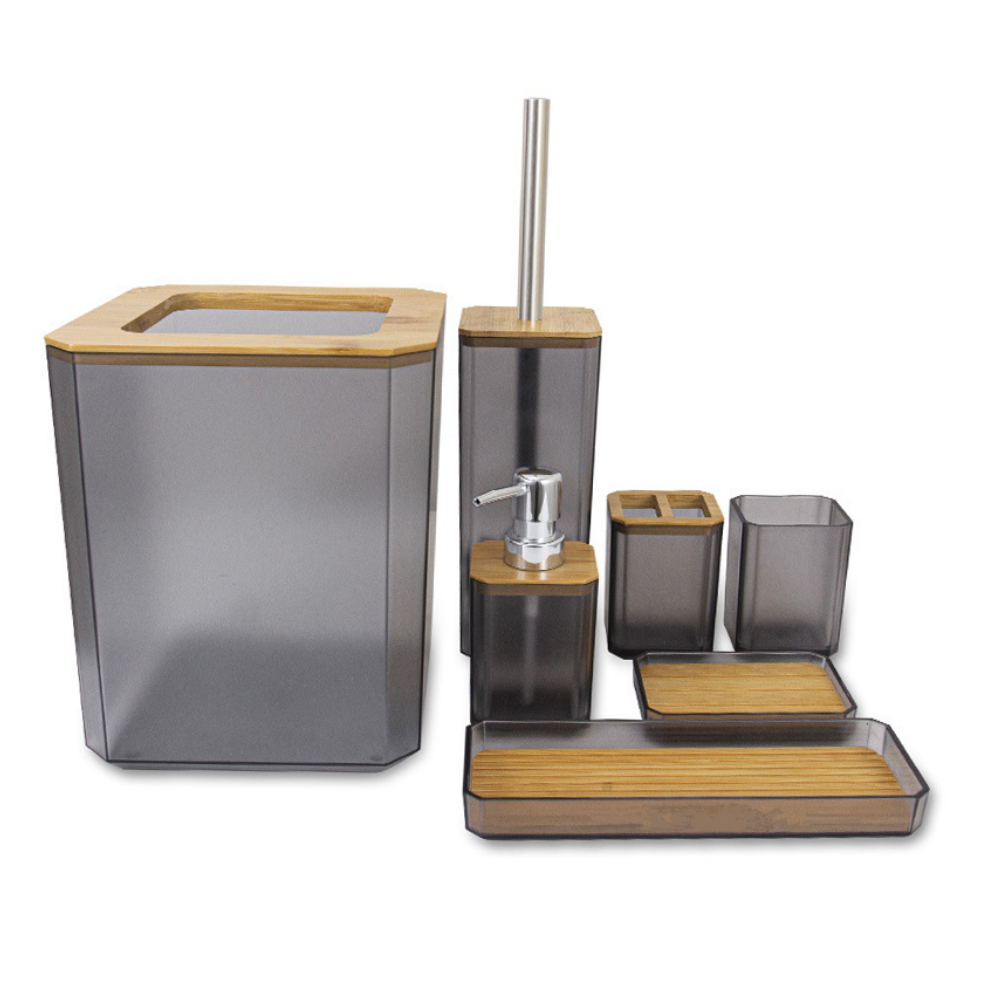
A bamboo bathroom accessories set featuring a toothbrush holder and soap dish—increasingly standard in Japan’s eco-conscious boutique hotels and ryokans.
Over the past three years, I have watched the landscape of hotel amenity procurement in Japan shift in a way that few industry observers anticipated. Boutique hotel supply companies that once prioritized polished chrome dispensers and synthetic toiletries are now actively seeking bamboo bathroom accessories sets for their guest amenity programs. The shift is not merely aesthetic—it reflects a deeper commitment to environmental responsibility that Japanese travelers and international guests now expect as standard when choosing where to stay.
Japan’s boutique hotel segment has long been a bellwether for global hospitality trends. Properties in Kyoto’s historic Gion district, Tokyo’s Shibuya design hotels, and Osaka’s emerging creative quarters have consistently set the bar for what thoughtful, considered hospitality looks like. When these establishments began adopting bamboo bathroom accessories—including toothbrush holders, soap dishes, and coordinated amenity sets—the signal to the broader market was unmistakable. Today, sourcing the right bamboo accessories set has become one of the most frequent inquiries I receive from supply chain managers at boutique hotel groups across the country. What makes this trend particularly significant is its depth. We are not simply witnessing a surface-level aesthetic preference for natural materials. The adoption of bamboo bathroom accessories in Japan’s boutique hotel sector is driven by a convergence of regulatory pressure, guest expectations, brand differentiation strategy, and genuine operational conviction that has made sustainable procurement a strategic priority rather than a marketing footnote.
Why Japan’s Boutique Hotels Are Going Eco-Friendly with Bathroom Accessories
The motivations behind this green transformation are layered and compelling. Japan has long grappled with a cultural paradox: a society deeply connected to nature and tradition, yet one of the world’s most resource-intensive consumers per capita. Hotel operators in the boutique segment have recognized that their guests—particularly those arriving from Europe, North America, and Southeast Asia—are scrutinizing the environmental footprint of their accommodations with a rigor that would have seemed excessive a decade ago.
We have observed that guest satisfaction surveys at eco-conscious boutique properties now routinely include questions about bathroom amenities and their environmental attributes. When a guest picks up a bamboo toothbrush holder rather than a plastic one, the message registers immediately. It tells them that this property thinks about the small details, the ones that accumulate into a meaningful environmental impact over thousands of guest stays. Several boutique hotel operators I have worked with report that switching to sustainable bathroom accessories has directly influenced their repeat booking rates among environmentally aware travelers. The data is still emerging in academic form, but the correlation is strong enough that it has moved from anecdotal observation to strategic priority for properties that take their environmental positioning seriously.
Beyond guest perception, Japan’s regulatory environment has tightened considerably regarding single-use plastics and waste generation in the accommodation sector. The Plastic Resource Circulation Promotion Act, enacted in 2021, established a framework for reducing plastic waste and promoting circular economy principles across Japanese industries. Municipal governments in Tokyo, Kyoto, Osaka, and other major hotel destinations have introduced their own ordinances with binding reduction targets for single-use plastics in hotels and ryokans.
In the bathroom—traditionally a hotspot for tiny plastic bottles, individually wrapped toiletries, and disposable accessories—the opportunity for material substitution is enormous. A coordinated bamboo bathroom accessories set addresses multiple substitution points simultaneously, creating operational efficiency alongside environmental benefit. Rather than managing separate procurement streams for plastic toothbrush cups, synthetic soap dishes, and disposable amenity containers, hotel operators can consolidate around a single bamboo set that serves multiple functions while eliminating several plastic touchpoints at once. The economic argument has also strengthened considerably. When I first began tracking this trend five years ago, the cost premium for quality bamboo accessories over conventional plastic alternatives was significant enough to require extended internal justification within hotel procurement departments. Today, as production volumes have increased and manufacturing processes have matured, that premium has narrowed to the point where it is frequently absorbed within standard amenity budgets without special approval.
What Makes a Bamboo Bathroom Accessories Set Ideal for Hotel Amenity Programs
When supply companies evaluate bathroom accessories for hotel programs, durability and visual coherence are non-negotiable. A bamboo bathroom accessories set designed for hotel use must withstand daily guest turnover, humid bathroom environments, and repeated cleaning cycles—all while maintaining an appearance that reinforces the property’s design narrative and brand positioning. These requirements distinguish hospitality-grade products from the standard consumer bamboo items available through mass retail channels, and we have found that the difference in performance between these tiers is substantial.
We have found that high-quality bamboo accessories sets intended for hospitality use are typically constructed from laminated or pressed bamboo rather than solid raw bamboo. This engineering approach eliminates the splitting, warping, and cracking that can occur when solid bamboo is exposed to the moisture cycles typical of a hotel bathroom. The production process involves compressing bamboo fibers under high pressure with environmentally safe adhesives, creating a denser, more stable material that retains its smooth surface and structural integrity over hundreds of guest cycles. For hotel procurement teams, this translates to a cost-per-use figure that makes the investment genuinely attractive compared to plastic alternatives that crack, cloud, or discolor within months of deployment.
Aesthetically, bamboo brings a warmth and natural texture that harmonizes effortlessly with the organic design language common to Japan’s boutique hotel sector. Whether the property favors a minimalist wabi-sabi aesthetic inspired by traditional Japanese aesthetics, a forest bath concept that draws on shinrin-yoku principles, or a modern Japanese-Nordic hybrid aesthetic, bamboo accessories integrate without demanding attention. They enhance the sensory environment rather than competing with it. I have visited boutique ryokans and design hotels where the bamboo soap dish and toothbrush holder felt as intentional as the property’s architectural choices—a coherence that guests notice even if they cannot articulate precisely what makes the bathroom feel different.
The tactile dimension should not be underestimated. Bamboo has a subtly textured surface that feels warmer to the touch than ceramic, glass, or metal alternatives. In a hotel bathroom context, where guests interact with accessories physically during intimate daily routines, this sensory quality matters. The difference between grasping a cold plastic toothbrush holder and a warm bamboo one is small but real, and it contributes to the overall impression of quality and thoughtfulness that boutique hotels work hard to cultivate.
From a supply chain perspective, a coordinated bamboo bathroom accessories set offers procurement efficiencies that discrete purchasing cannot match. Hotel supply companies serving multiple boutique properties can standardize on a single bamboo accessories set across their portfolio, reducing the number of SKUs they manage, simplifying inventory systems, and negotiating better pricing through volume consolidation. This standardization also simplifies housekeeping training, as staff need to learn care and maintenance protocols for only one accessory line rather than a hodgepodge of different products from different suppliers.
Key Products in a Complete Bamboo Bathroom Accessories Set
A comprehensive bamboo bathroom accessories set for hotel amenity programs typically centers on several core items, each serving a specific functional and aesthetic role within the guest bathroom.
Bamboo Toothbrush Holder
The toothbrush holder is arguably the most visible and highest-touch item in the set. In a hotel bathroom, it serves the dual function of practical guest amenity and brand statement. Bamboo toothbrush holders designed for hotel use generally feature individual compartments or slots for multiple toothbrushes—a practical consideration for properties where guests may share a room. Some designs incorporate a closed base to catch water drainage, while others use an open lattice structure that allows air circulation and faster drying between guest stays. We have noted that boutique hotels increasingly prefer toothbrush holders with a minimal counter footprint, as bathroom vanity space in Japanese urban boutique hotel properties is often limited by design. A compact, vertically oriented bamboo toothbrush holder that holds two to four brushes without sprawling across the vanity is particularly well-suited to the Japanese urban boutique hotel context.
Bamboo Soap Dish
The soap dish completes the core amenity pairing that most often defines a bamboo bathroom accessories set. In an era when many hotels have shifted to wall-mounted dispensers for liquid soap, a dedicated bamboo soap dish signals a deliberate return to bar soap—a product category that carries strong eco-friendly connotations in the minds of environmentally conscious travelers. Bar soap generates zero plastic packaging waste, and when paired with a bamboo dish that allows proper drainage and airflow, it represents one of the simplest and most impactful sustainable swaps a boutique hotel can make in its amenity program. Bamboo soap dishes for hotel programs typically feature a slatted or perforated base that elevates the soap bar above a drainage channel, preventing it from sitting in pooled water and extending the soap’s usable life. The dish itself is lightweight, easy to handle, and when manufactured from quality laminated bamboo, resistant to the mold and mildew that can affect lesser-quality wooden bathroom items.
Additional Accessories
Beyond the toothbrush holder and soap dish, many bamboo bathroom accessories sets for hotels include a bamboo tray or vanity organizer, a cotton swab and cosmetic accessory organizer, a toilet brush holder, and a shaving kit tray. The vanity tray is particularly versatile—it can serve as a unifying element that holds multiple smaller items while protecting the vanity surface from moisture damage. Some boutique hotel operators use the vanity tray as a branded element, with the hotel name or logo laser-engraved into the bamboo surface. Some suppliers offer fully customizable sets where boutique hotel operators can select precisely which items their amenity program requires, allowing each property to strike the right balance between comprehensive presentation and budget discipline.
Japan Hotel Sustainability Standards and How Bamboo Accessories Meet Them
Japan’s approach to hotel sustainability is governed by a combination of national guidelines, municipal ordinances, and voluntary certification schemes that together create a complex but navigable regulatory landscape. The Japan Tourism Agency’s Sustainability Guidelines for Tourism Destinations, first released in 2022 and substantially refined in subsequent years, explicitly encourages hotels to reduce single-use plastics and source eco-friendly materials for guest-facing amenities. While these guidelines remain voluntary at the national level, municipal governments in Tokyo, Kyoto, Osaka, Yokohama, and other major hotel destinations have introduced their own ordinances with mandatory reduction targets for plastic waste in the accommodation sector, creating a de facto regulatory environment that is becoming increasingly binding over time.
Bamboo bathroom accessories align with several key criteria in these standards. Bamboo is a rapidly renewable resource, reaching harvestable maturity in three to five years compared to the decades required for most commercial hardwoods. This rapid renewability means that bamboo harvesting can be sustained without depleting forest ecosystems, provided that responsible cultivation and harvesting practices are followed. When the bamboo used in hotel accessories carries certification from the Forest Stewardship Council (FSC), supply companies can document that the raw material originated from responsibly managed forests—a level of traceability that is increasingly important to hotel sustainability reporting.
We have also observed that Japanese boutique hotels seeking Green Key, LEAF (Longgan Environmental Assessment Framework), or Eco Action certification—a growing trend among environmentally committed properties—find that the switch to bamboo bathroom accessories contributes measurable points toward their final scoring. The accessories are visible to guests, photograph well for sustainability communications, and represent a tangible, verifiable substitution of renewable material for plastic in a guest-facing application. A reputable bamboo bathroom accessories set supplier will maintain FSC certification documentation as standard practice, including chain-of-custody certificates, MSDS sheets for finishing treatments, and factory audit reports from third-party social and environmental compliance inspectors.
Sourcing, Installing, and Maintaining Bamboo Accessories Sets
Sourcing bamboo bathroom accessories for hotel programs requires navigating supplier selection, quality verification, logistics coordination, and customs considerations with precision and expertise. The primary sourcing geographies for bamboo hotel accessories are China, Vietnam, and to a lesser extent, Japan itself. Chinese manufacturing dominates the market due to the country’s extensive bamboo forest resources and highly developed processing infrastructure, though not all Chinese manufacturers produce at the quality level that Japanese boutique hotels demand. We have learned through experience to evaluate potential suppliers across several dimensions before recommending them to hotel clients.
Sample evaluation is non-negotiable before committing to a bulk order. Supply companies should request physical samples of the bamboo accessories set and subject them to a simulated hotel use cycle—exposure to sustained humidity, rapid temperature fluctuation, and repeated cleaning with the cleaning agents typically used in Japanese hotel housekeeping operations. This practical test reveals how the bamboo finish holds up over time and whether the construction is robust enough for commercial hospitality use. Suppliers that are confident in their products will provide samples without hesitation and will often cover sample costs as an investment in the relationship.
Customization capability also matters enormously. Boutique hotels frequently require custom dimensions, specific finishes, or branded elements on their bathroom accessories. A supplier that can accommodate bespoke requests—such as laser engraving of the hotel’s logo on a bamboo toothbrush holder, custom color staining to match the property’s design palette, or modified dimensions to fit non-standard vanity configurations—offers far greater strategic value than a purely transactional manufacturer. We have found consistently that suppliers who invest the time to understand a boutique hotel’s design language and operational context outperform those who simply present a price list and wait for a purchase order.
Proper installation and maintenance protocols are critical to ensuring that bamboo bathroom accessories deliver their intended lifespan and visual appeal. Bamboo accessories should be placed in well-ventilated areas of the bathroom where air circulation can facilitate drying after use. While quality laminated bamboo is engineered to resist moisture damage, prolonged exposure to standing water will accelerate degradation. In practice, this means positioning the bamboo toothbrush holder and soap dish away from the direct water stream of the shower and ensuring that any drainage features in the soap dish are not blocked by soap residue or debris.
Maintenance routines for bamboo hotel accessories are simpler than many hotel housekeeping teams assume. Regular wiping with a soft, damp cloth is sufficient for day-to-day cleaning between guest stays. For deeper cleaning, housekeeping staff can use a mild soap solution followed by thorough drying with a clean towel. Hotel management should instruct staff to avoid abrasive cleaners, scouring pads, and bleach-containing products, as these can damage the bamboo finish. Periodic application of a food-safe bamboo oil or beeswax polish—performed during room turnover or deep cleaning cycles—helps maintain the bamboo’s natural luster and provides additional moisture resistance. A housekeeping supervisor at a Kyoto boutique property told me that adding bamboo accessory care to their turnover checklist added less than two minutes per room—a negligible labor investment relative to the guest experience return.
Hotels should establish a replacement schedule based on observed condition rather than arbitrary calendar timelines. High-turnover properties may find that bamboo toothbrush holders show visible wear after eight to twelve months of guest use. Lower-occupancy boutique properties might extend that replacement cycle to two to three years. Having a modest replacement inventory on hand ensures that worn accessories are swapped promptly during routine housekeeping, maintaining the property’s environmental positioning and visual standards.
The Business Case for Bamboo Bathroom Accessories in Japan’s Boutique Hotel Sector
The shift toward bamboo bathroom accessories sets in Japan’s boutique hotel segment is not a passing trend or a fashion cycle that will reverse when the next aesthetic preference emerges. It is a structural realignment driven by the convergence of guest expectations, regulatory pressure, brand differentiation imperatives, and increasingly favorable economics for sustainable procurement. Supply companies that recognize this reality and position themselves as knowledgeable, reliable partners in the transition will capture significant commercial opportunity in a growing market segment.
The evidence supporting this transition is compelling and multi-dimensional. Properties that have made the switch report improved guest satisfaction scores related to environmental credentials and overall amenity quality perception. They have documented measurable reductions in plastic waste generation from bathroom amenity operations. They have achieved better alignment with sustainability certification requirements that increasingly influence visibility and ranking on booking platforms used by environmentally conscious travelers. And critically, the cost differential between quality bamboo accessories and conventional plastic alternatives has narrowed considerably as production volumes have increased and manufacturing expertise has matured, making the economics more favorable than ever for boutique hotel operators seeking to balance environmental responsibility with budget discipline.
For supply companies serving Japan’s boutique hotel sector, the path forward is clear: develop genuine expertise in bamboo bathroom accessories sets and the broader category of sustainable hotel amenities. Build deep, reliable relationships with manufacturers that can consistently meet hospitality-grade quality standards and provide the documentation and customization capabilities that boutique hotel clients require. Invest in educating hotel clients on the full lifecycle value proposition of sustainable amenity programs—not just the initial purchase price, but the total cost of ownership, the guest experience contribution, and the regulatory and certification alignment benefits. Those supply companies that make this investment will find themselves at the center of one of the most significant and enduring procurement shifts in Japan’s hospitality industry, serving as trusted partners to hotel operators who are building their brands around environmental conviction rather than simply checking a sustainability box.
Frequently Asked Questions
Post time: Jun-23-2026